
What if leadership development has been shaped by people who no longer remember what it is like to be led?
In 2025, ResoLex brought together senior leaders from major projects and high-performance environments to explore leadership, resilience and personal performance. These conversations highlighted the need to move beyond the traditional “hero leader” model and create more collaborative, emotionally intelligent and sustainable approaches to leadership.
However, one important voice was still missing: the next generation of leaders who are experiencing today’s leadership models first-hand and will ultimately inherit responsibility for delivering tomorrow’s major programmes.
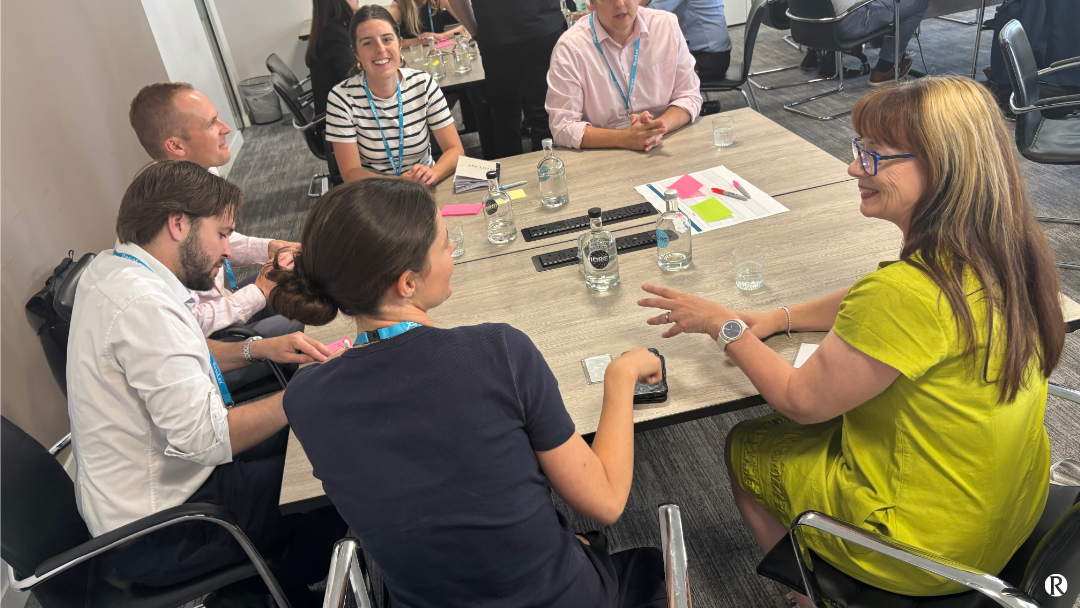
ResoLex, supported by the Major Projects Association, recently hosted an interactive workshop for early-career professionals and emerging leaders. The session was designed to test previous findings, understand where current leadership thinking reflects their experience and identify where it falls short.
We were delighted to be joined by Professor Christine Unterhitzenberger from the University of Leeds and Nathan Rendel from Hintsa Performance, who brought complementary perspectives on sustainable careers, leadership under pressure and the realities facing those progressing through the major projects industry.
The reality of a sustainable career
Professor Christine Unterhitzenberger shared interim findings from her recent research into sustainable careers in major projects.
Major projects can offer an unusually strong sense of purpose, variety and opportunity. However, they can also involve long delivery cycles, uncertain pipelines and career structures that do not always reflect how people want, or need, to develop.
The research encouraged participants to think about career sustainability through more than progression or productivity alone. Happiness, health, purpose and the surrounding organisational context all influence whether people can build careers that remain fulfilling over time.
This provided an important starting point for the discussion. Developing future leaders is not simply about preparing individuals for their next role. It is also about creating an environment in which talented people want to remain, can continue learning and are able to sustain their contribution across a career.
Leadership is becoming more relentless
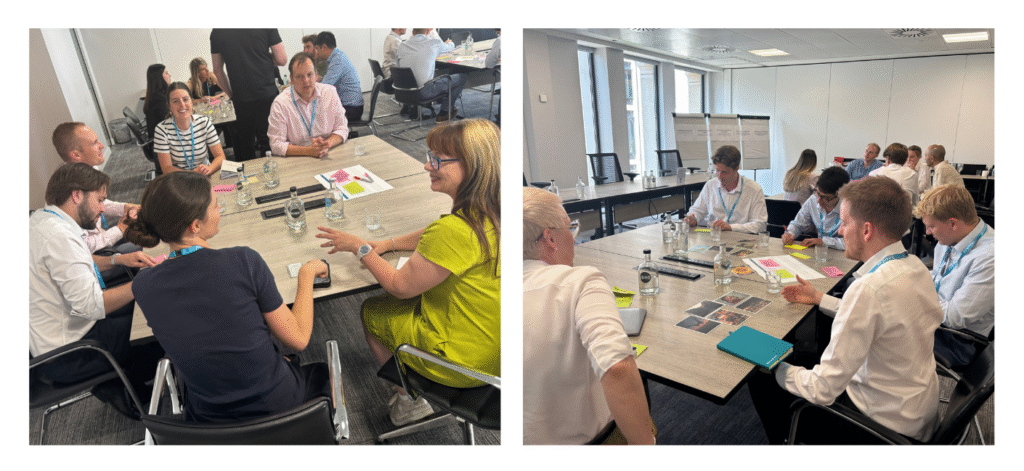
Hintsa Performance explored how the demands placed on leaders have changed.
Leaders are now expected to provide clarity, maintain performance, lead change and make decisions while operating in environments defined by uncertainty, information overload, hybrid working and continuous pressure. Leadership frameworks may describe the right behaviours, but those behaviours can become much harder to access when under pressure.
The discussion drew attention to an often-overlooked component of leadership development, capacity. Knowledge and technical competence remain important, but future leaders will also need the physical, cognitive and emotional capacity to apply their skills consistently when leadership is at its most difficult.
This shifted the conversation away from resilience as simply enduring difficult conditions. Sustainable performance requires organisations and individuals to manage pressure, recovery and personal capacity deliberately.
What future leaders told us
Participants were then invited to respond to five themes drawn from ResoLex’s previous leadership events:
- Collaborative leadership
- Emotional intelligence
- Development and training
- Clear career progression
- Resilience and wellbeing
The discussion broadly supported the five themes presented, while also adding important nuance.
Participants agreed that collaborative leadership, emotional intelligence, development, career progression and wellbeing all matter. However, they also stressed that none of these can be considered in isolation or applied as a fixed formula.
Collaboration should not remove accountability or slow decision-making. Emotional intelligence must sit alongside sufficient technical and organisational understanding. Development needs protected time, visible sponsorship and opportunities to learn through experience. Career progression should offer clarity without assuming that everyone follows the same route.
A recurring message was that leadership is shaped as much by what people observe as by what they are taught. Future leaders look to senior colleagues for examples of how to make decisions, manage pressure, invest in others and respond when things do not go to plan.
Creating the conditions for future leaders to succeed
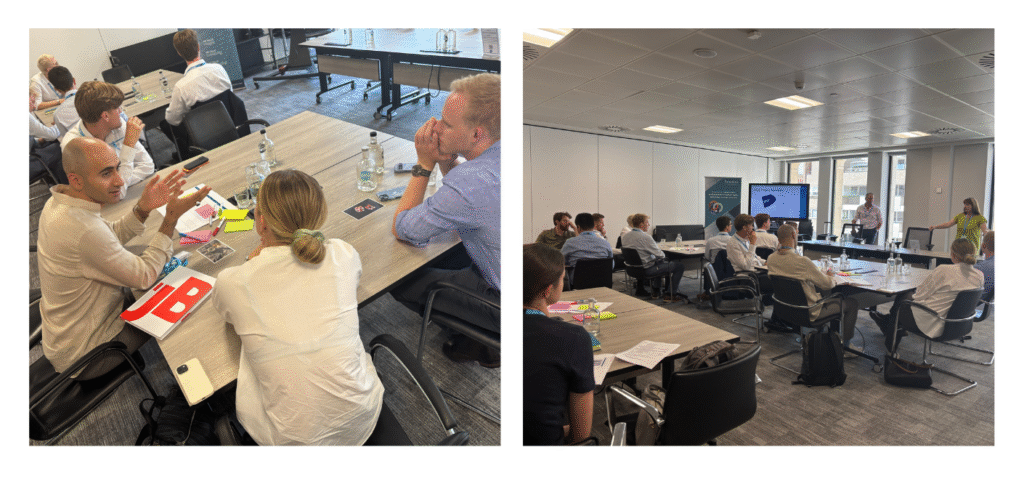
The second part of the workshop moved from reflection to action. Participants considered the factors that help and hinder their development before identifying practical steps current leaders and organisations could take.
The conversation highlighted several consistent principles: Future leaders need access to mentors, sponsors and senior leaders who are visible and available. They need permission to stretch themselves, make decisions and learn from failure. They need clearer communication about opportunities, meaningful feedback and dedicated time for development. Just as importantly, they need leaders who demonstrate the behaviours they expect others to adopt.
The workshop also reinforced that there is no single model of “good leadership” that works in every situation. Leadership needs to respond to context, balancing collaboration with direction, autonomy with support, and performance with recovery.
The challenge for the industry is therefore not simply to identify the characteristics of an ideal future leader. It is to create the structures, cultures and experiences through which a diverse range of people can develop and succeed.
The full findings from the session will contribute to a ResoLex whitepaper, supported by the Major Projects Association, exploring how the industry can better select, develop and support the leaders needed for the future of major programmes.